
Our Vision – Aboriginal Housing in Aboriginal Hands
Our aim is the provision of a sufficient supply of appropriate and affordable housing for Aboriginal people – delivered and managed by Aboriginal-controlled organisations.
Housing for Aboriginal people
Aboriginal housing means the whole system of houses for Aboriginal people – the houses themselves, the organisations that provide, manage and maintain them and the services that support Aboriginal people to live in them. Overcoming the diffuculties faced in some of the locations are crucial in developing a new system.
There are specific Closing the Gap measures in relation to Aboriginal housing, such as how many people live in housing that is appropriately sized, others relate to the standard of Aboriginal housing.
Creating new housing opportunities
NT Shelter reports that, relative to the national average, there are 12 times more homeless people and 87% of them are Aboriginal. Over half of all remote community homes are overcrowded, and 97.6% of people living in severely overcrowded dwellings are Aboriginal.
AHNT has a seat on the Joint Steering Committee (JSC) that oversees the National Partnership for Remote Housing Northern Territory. One of its aims is to reduce overcrowding in 73 remote communities and the 17 Alice Springs town camps, utilising Commonwealth and NTG funding.
Appropriate housing
Appropriate housing has functioning services for water, power and waste and is in a good state of repair. It must also be fit for its environmental context and for the culture of the people who live there. Many Aboriginal homes in remote communities and on homelands are in need of repair and replacement.
For public housing the NT Government is the service provider. For remote communities and town camps it will be the local council, the regional council, or a NRSCH-registered Aboriginal community housing provider. For homelands it will be an Aboriginal corporation or a proprietary company.
Aboriginal housing and infrastructure in remote communities and homelands are subject to many levels of inspection – by governments, service providers, researchers and consultants. Improvements in coordinating the inspections, sharing the data on the condition of housing and infrastructure are a major focus for AHNT and our members across the Territory.
Housing fit for culture
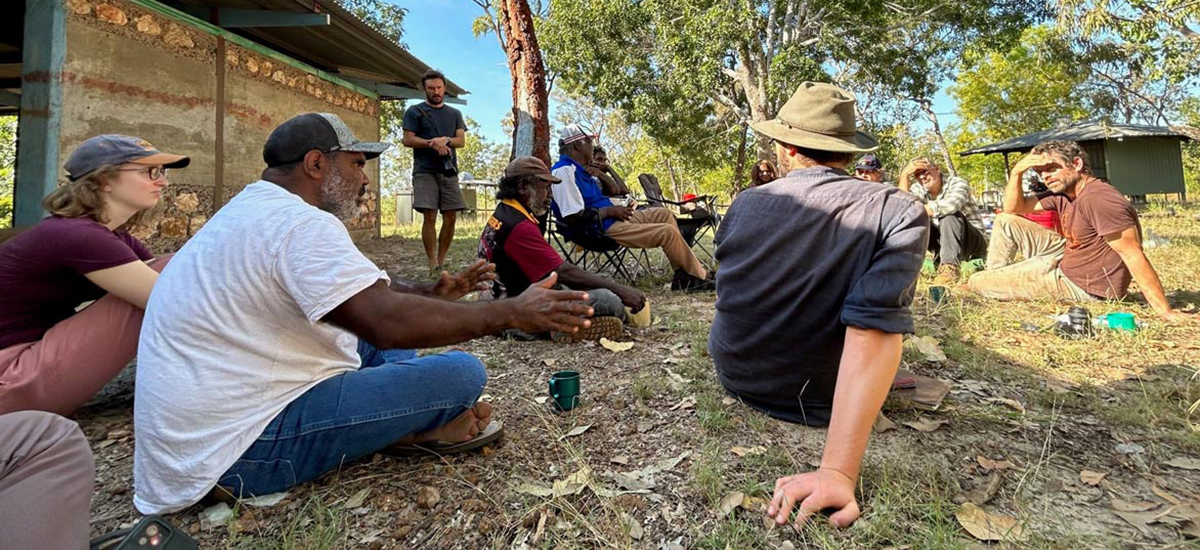
In the past very little Aboriginal housing was built with consideration of site, orientation, thermal mass, insulation, shade, ventilation or landscaping, crucial for the comfort and wellbeing of residents. There are around 40 different language groups in the Northern Territory, equating to cultural variation. A home that is a good cultural fit for the residents needs to involve those residents in the design process. Wilya Janta have built a new home in Tennant Creek, The first in a series of new “explain homes” — modular and culture-led houses, designed by an architect in consultation with the residents creating a landmark dwelling that can only signal positive developments in the design and construction of new community housing.
This building, thoughtfully, has:
- a flexible configuration, and spare facilities, to accommodate visitors
- a view, from a seated perspective inside the house, of who is approaching
- a divided layout, with dual ablutions, to enable certain residents to separate appropriately
- a sheltered outdoor sleeping area
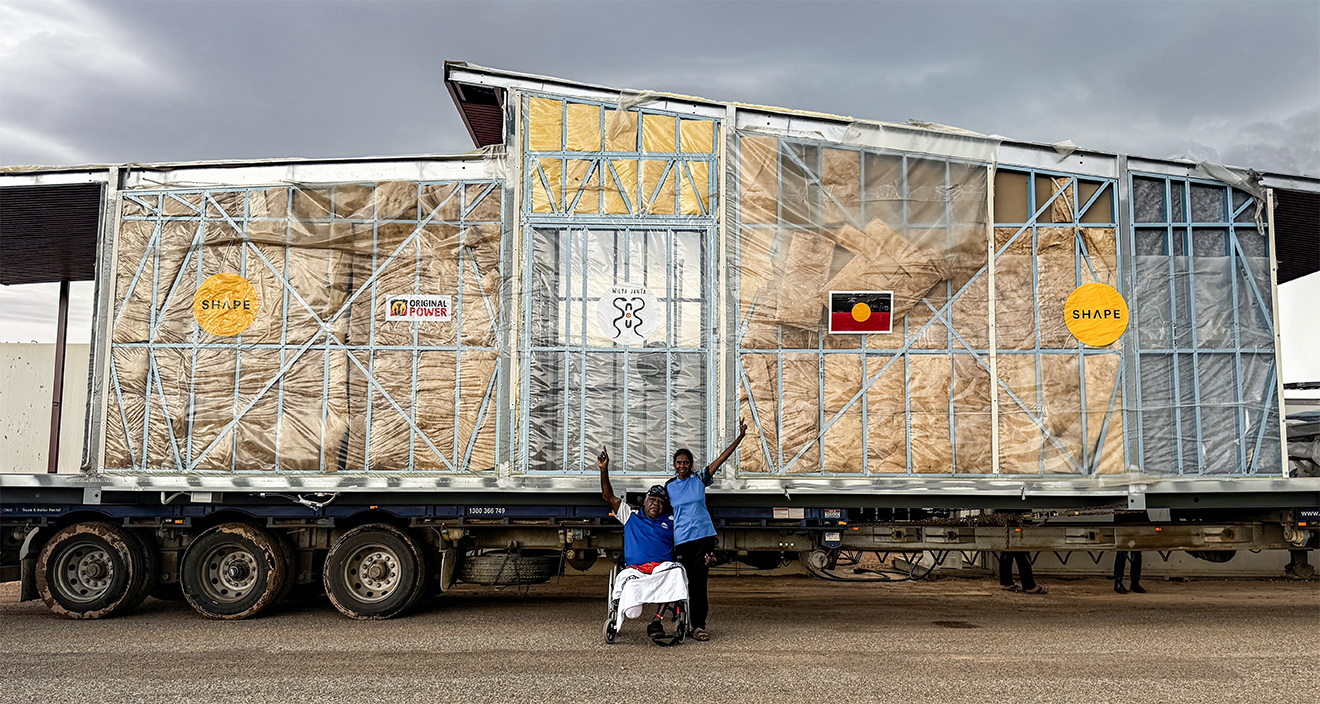
Housing that is Aboriginal community-controlled means that from design and construction through to maintenance and tenancy support, Aboriginal people are the lead decision-makers. This concept of community control is central to AHNT’s vision of ‘Aboriginal housing in Aboriginal hands’.
Closing the Gap was developed in partnership between all Australian governments and the Coalition of Aboriginal and Torres Strait Islander Peak Organisations and has a priority to build the community-controlled sector.
The Northern Territory Community Housing Growth Strategy for 2022–32 commits the NT Government to supporting a gradual return of Aboriginal housing to community control.
One clear measure of the strengthening of community control is the number of Aboriginal community-controlled housing providers that are incorporated and registered with the National Regulatory System for Community Housing (NRSCH). AHNT supports the homelands movement of Aboriginal people returning to their ancestral lands to develop new villages and livelihoods. AHNT advocates for legislative reform to make it easier to build on homelands.
Our policy positions
AHNT has a policy position on a range of topics.
Photo: Jimmy Frank speaking about the design of housing at Barapunta homeland, Rembarrnga country, Central Arnhem, June 2023; by Cath Styles
